










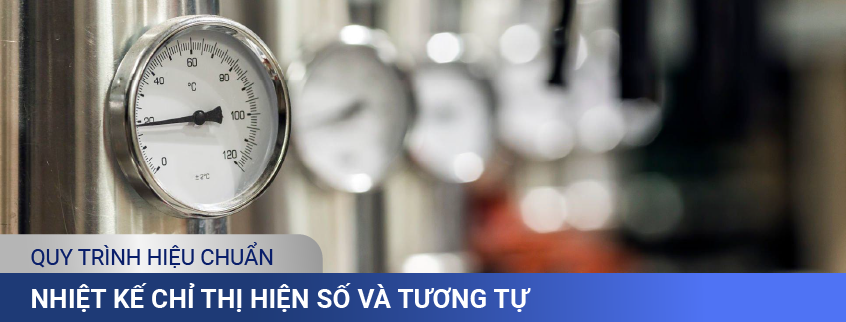
Digital and analog thermometer calibration
Main Content
- What is a thermometer?
- Structure and operating principle
- Application
- Calibration procedure
A thermometer is a universal device used to measure temperature. Depending on the purpose of use, thermometers are classified into many different types such as liquid thermometers, resistance thermometers, bimetallic thermometers, etc. .. Thermometers play an important role in all fields, widely used from home scale to experiments as well as in the manufacturing industry.
A thermometer can be understood as a device used to measure temperature and temperature gradients. Temperature can be defined as a measurable degree of hotness or coldness. The different units for measuring temperature are Celsius (° C), Kelvin (K) và Fahrenheit (° F).
2. Structure and operating principle
Most thermometers have two main parts:
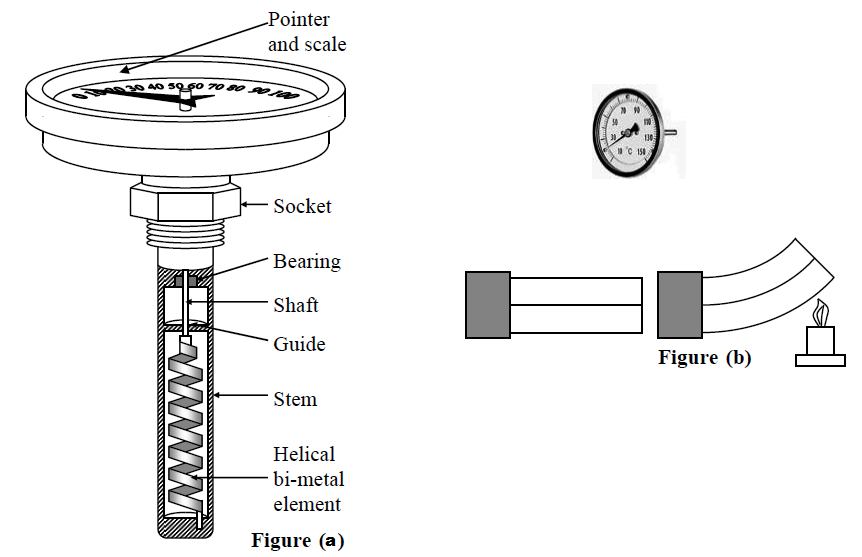
- Temperature sensor part: bulb filled with mercury or alcohol; semiconductor sensor, analog to digital converter (ADC)
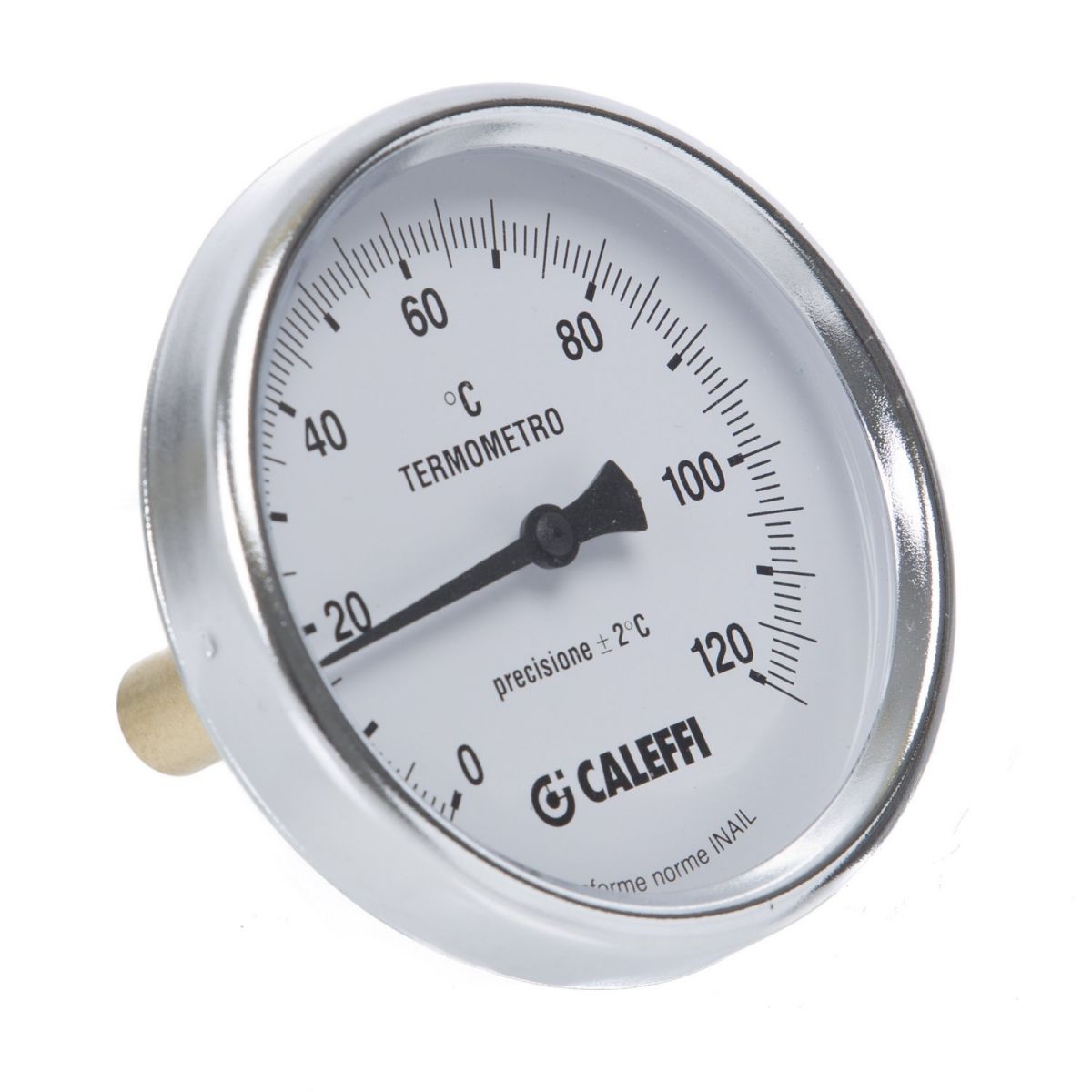
- Result display part: graduated scale on the thermometer; The screen shows numbers.
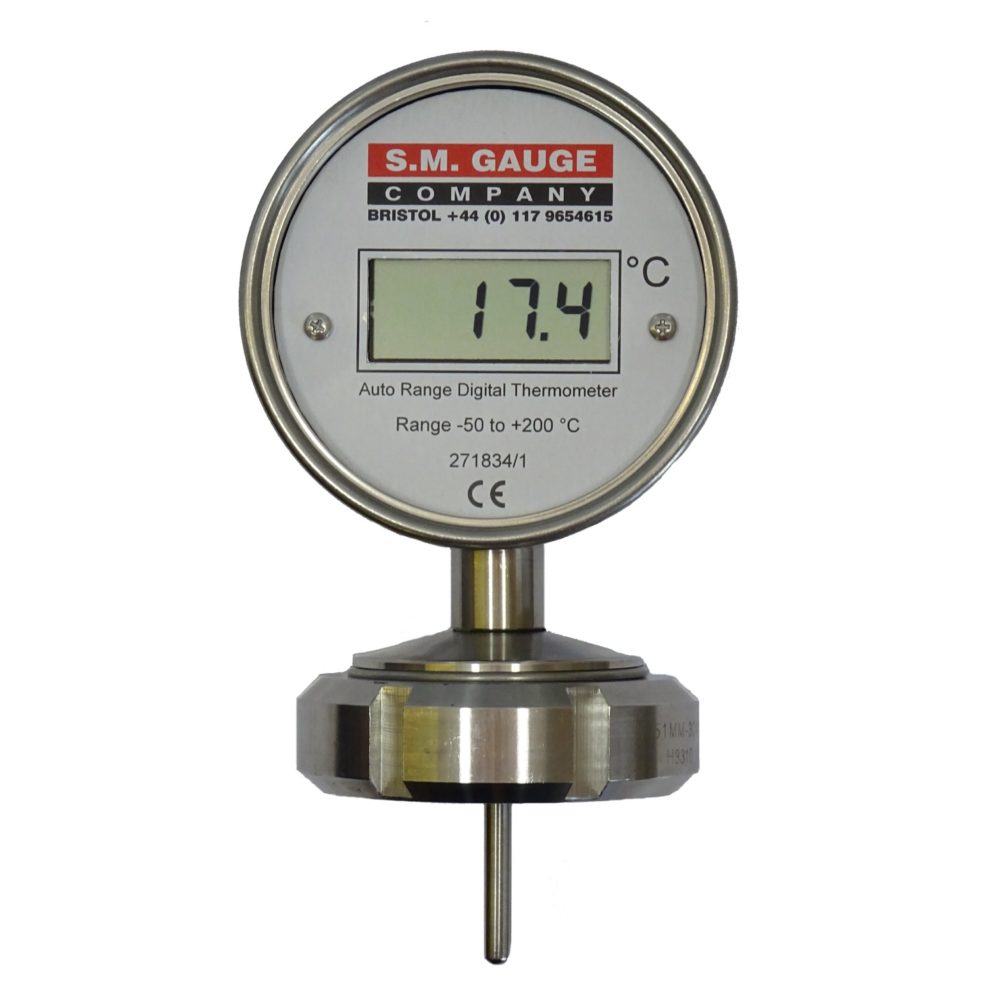
Electronic thermometer: This type of thermometer is designed to use a thermal sensor to measure temperature. The sensor is connected to a pre-programmed electronic circuit board. As the measurement process takes place, the sensor will collect information, transmit it to the control panel and then display the measurement results on the screen.
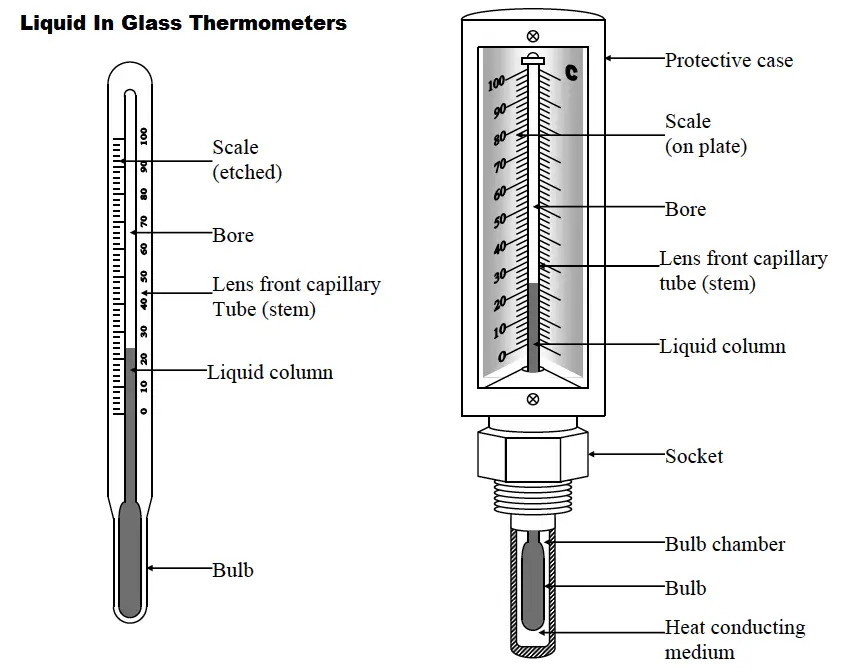
Liquid thermometer: Works based on the principle of expansion of the liquid inside the thermometer. This type of thermometer uses a thin glass tube filled with a small amount of a silvery liquid (usually mercury—a special metal that is liquid at room temperature).
3. Application
The main function of a thermometer is to measure temperature. This device is widely used and applied in many fields from household, medical, and laboratory to manufacturing industries, serving many different purposes such as:
- Check body temperature in medicine
- Check the water temperature, and check the temperature of food items to reach the allowable temperature for food preservation,...
- Widely used for laboratory research purposes, measuring solution temperature, measuring atmospheric and environmental temperatures to perform experiments
- Used in air temperature control systems such as air conditioners, freezers, heaters, refrigerators, water heaters, etc.
- Adequate air leakage and insulation testing to identify energy loss and poor insulation is important in various industries to comply with safety standards.
- To detect hidden problems,...
4. Calibration procedure
The order, procedures, methods, and means of calibrating digital and similar indicator thermometers have been specified in technical documents ĐLVN 138: 2004. Below is a summary of the procedure for calibrating analog and digital indicator thermometers.
- Standard thermometers have measuring ranges and uncertainty conditions that comply with calibration requirements and are calibrated according to the international temperature scale ITS-90.
- The standard temperature of the standard combination (standard thermometer, standard temperature environment creation device, measuring device, indicator device...) must be less than 1/3 of the standard temperature of the thermometer to be calibrated.
- Score average 0 oC with the uncertainty less than or equal to 0,01 oC
- Standard resistor box, standard mV voltage generator, or standard resistor with measuring range and accuracy suitable for calibration requirements.
- Devices that create standard temperature environments (thermostats, calibration furnaces...) have temperature ranges and uncertainty conditions consistent with calibration requirements.
- Mounting system for standard thermometers and thermometers that need to be calibrated according to technical requirements.
- Optical system with magnification not less than 4 times
- Megom meter 500 V/ 500 MΩ
- Gloves, cleaning solution, cotton cloth... to clean the thermometer before calibration.
- Ambient temperature: (23 ± 2)oC
- Environmental humidity: not greater than 80%RH
Calibration environmental conditions only need to satisfy the usage requirements of the thermometer to be calibrated.
- Clean the means to be calibrated
- Install and connect wires according to technical requirements
- Select and prepare a standard combination suitable for the standard thermometer to be calibrated
- Information recorded on the thermometer must be clear, including: thermometer type, measuring range, accuracy level, manufacturing facility, production number...
- Connect wires securely, safely and with good contact; The thermometer's protective cover (indicator and measuring head) is not damaged, crushed, or broken.
- If the thermometer uses a battery, the battery must be replaced with a new one before calibration. The indicator and measuring head of the thermometer must be synchronized and corresponding in type and temperature measuring range.
- The thermometers that need to be calibrated must meet the following requirements:
- The thermometer displays numbers, the displayed numbers must be clear, not blurred or out of focus, and functions function normally.
- The thermometer indicator must be similar, the graduation lines must be complete and not blurred or lost digits, the indicator needle must not be frictional or stuck.
- The ambient temperature indicator of the thermometer to be calibrated must be normal according to the features of each type of thermometer.
- Measurement checks are performed by comparison: the readings of the thermometer to be calibrated at each test point are compared with the "true" temperature value determined by the standard combination.
- The number of test points must be evenly divided within the temperature range to be calibrated and not less than three points; Calibrate from low point to highest point (must calibrate the 0oC point first for thermometers with graduation at the 0oC point) and vice versa.
- Prepare the 0oC (if the thermometer needs calibration with a scale divided at the 0oC point).
- Operate the standard combination according to the equipment instructions.
- Install standard thermometers and thermometers that need to be calibrated into thermostats and calibration furnaces according to technical requirements.
- Set the temperature of the device to create the environment corresponding to the temperature to be tested
- When the temperature is stable (indicator value equal to set value), let it stabilize for at least 10 minutes, read the temperature readings of the standard and the thermometer to be calibrated. Reading order in order:
Standard → N1 → N2 → N3 …. → Nn → Standard
- In which: N1, N2, .... Nn is the thermometer to be calibrated
The process of reading numbers from the standard thermometer to the secondary thermometer Nn and reading back to the standard thermometer is one reading. The number of readings at each test point is not less than 3 times.
- Take turns measuring as above for the next test points.
- Calibrate in the direction of decreasing temperature, from the highest point to the lowest point in the temperature range to be calibrated, the measurement sequence is as shown above, the delay response (error response) of the thermometer to be calibrated will calculated at which calibration point has the largest average deviation in the calibration direction of increasing and decreasing temperature.
- The measured temperature value at each test point of the standard thermometer and the calibration-required thermometer is the average value of the measurements.
- Calculate the correction number at each test point of the calibration-required thermometer
- Calculate the standard deviation at each test point of the temperature value readings of the standard thermometer and the calibration-required thermometer.
- Uncertainty-U is estimated according to the following components:
- Handling the measurement uncertainty of the standard assembly, when determining the "true" temperature of the temperature-generating medium (uch)
- Measurement uncertainty of the calibration-required thermometer, when indicating temperature values within the calibration temperature range (ubk)
- Calculate the measurement uncertainty due to the conjugate standard of the calibrated thermometer due to the above measurement uncertainty components (uc)
- Calculate the expanded measurement uncertainty :
U = 2.uc (with 95% confidence level and the coverage factor k=2)
After calibration, digital and analog indicator thermometers are stamped and issued a calibration certificate with calibration results.
Recommended calibration cycle: 01 year
To consult and request a quote on our digital and analog indicator thermometer calibration services, please kindly contact us via the following information:
LABORATORY: DONG TAM MEASUREMENT AND TECHNICAL TRADING SERVICE CO., LTD
ADDRESS: No.57-59 Street 11, Binh Hung Residential Area, Binh Hung Commune, Binh Chanh District, Ho Chi Minh City
TEL: 028 375 83 869 - Hotline: 0909 347 891 (Mr. Lâm)
Email: info@dongtam-mes.vn
Relative post | Xem tất cả
- Stopwatches calibration
- ORP meter calibration
- Hydrometer calibration
- Analytical and Technical balance calibration
- Analytical and Technical balance verification
- Spring dial scales verification
- Spring dial scales calibration
- Bench weight scale verification
- Bench weight scales calibration
- Platform scales verification
- Platform scales calibration
- Chlorine meter calibration
 Legal
Legal  Call: 0283.7583869
  Search for Certificate
  Contact